A Muslim wedding is a beautiful blend of religious tradition, family values, and cultural practice. At the heart of this sacred union is the Nikah, a formal marriage contract in which the bride and groom give their consent before an officiant and witnesses. This is followed by the Walima, the groom's reception, and in many South Asian Muslim communities, festive pre-wedding gatherings such as the Mehndi night. A Muslim wedding is not just a union of two individuals, but a celebration of love, faith, and commitment.
What is a Muslim Wedding?
A Muslim wedding is a religious and cultural event that signifies the union of two individuals under the bond of Islam. The most important part of a Muslim wedding is the Nikah, a formal contract between the bride and groom that is solemnized in the presence of witnesses. The Nikah is a sacred promise between the couple to live together in harmony, fulfill their responsibilities towards one another, and uphold the teachings of Islam in their marriage.
The wedding is not just a legal or social contract, but a spiritual union. The couple makes vows to be faithful, to respect one another, and to be supportive in all circumstances. The ceremony typically takes place in a mosque or at the home of the bride and groom, depending on the family's preferences. The presence of close family members and friends adds to the sanctity of the occasion.
The Nikah Ceremony: The Heart of a Muslim Wedding
The Nikah is the central event of a Muslim wedding, built around a few essential elements. The bride's Wali, typically her father or another male guardian, represents her consent to the marriage, and at least two witnesses are required for the Nikah to be valid. An Imam or another qualified person officiates the ceremony, delivering the Khutbah-e-Nikah, a short sermon, before the couple exchanges their formal offer and acceptance, known as Ijab and Qubul. The groom also commits to giving the bride a Mahr, a mandatory gift of money, property, or something else of value that belongs to the bride alone, distinct from a dowry since it flows from the groom to the bride rather than the other way around.
The ceremony includes the signing of the Nikah contract, or Nikahnama, which is then witnessed and formally recorded. This legal and spiritual agreement signifies the couple's readiness to begin their married life together.
The Walima: The Groom's Wedding Reception
Once the Nikah is complete, the groom's family traditionally hosts a Walima, a feast to publicly announce the marriage and share the couple's joy with the wider community. The Walima is considered an important tradition in Islam, and guests, including family, friends, and neighbors, are warmly welcomed to celebrate the newlyweds together.
Pre-Wedding Celebrations: The Mehndi Night
In many South Asian Muslim communities, the days before the Nikah include festive cultural gatherings that, while not religious requirements, have become cherished parts of the celebration. The most popular is the Mehndi night, during which the bride's hands and feet are adorned with intricate henna designs while family and friends gather to sing and celebrate the upcoming wedding. The atmosphere is filled with joy and anticipation as the bride prepares for her big day.
Wedding Attire and Customs
The attire worn during a Muslim wedding varies widely by region and family tradition, but is always chosen to reflect elegance and modesty. Brides often wear a richly embroidered lehenga, gharara, or sharara, or a flowing gown in colors such as red, gold, ivory, or white, typically paired with a dupatta or veil. The groom usually wears a formal outfit such as a Sherwani, a long coat-like garment often decorated with intricate embroidery, sometimes paired with a turban as a symbol of his status. Both the bride and groom's attire reflects their cultural heritage and personal style, adding to the overall grandeur of the event.
Post-Wedding Celebrations
After the Nikah and Walima, many families also host a reception where extended family and friends gather to celebrate the newlywed couple with music, food, and festivities. In many Muslim communities, the bride moves to her husband's home after the wedding, marking the beginning of their new life together, and this transition is often marked with a warm family gathering where she is welcomed by her in-laws.
Announce Your Muslim Wedding with a Video Invitation
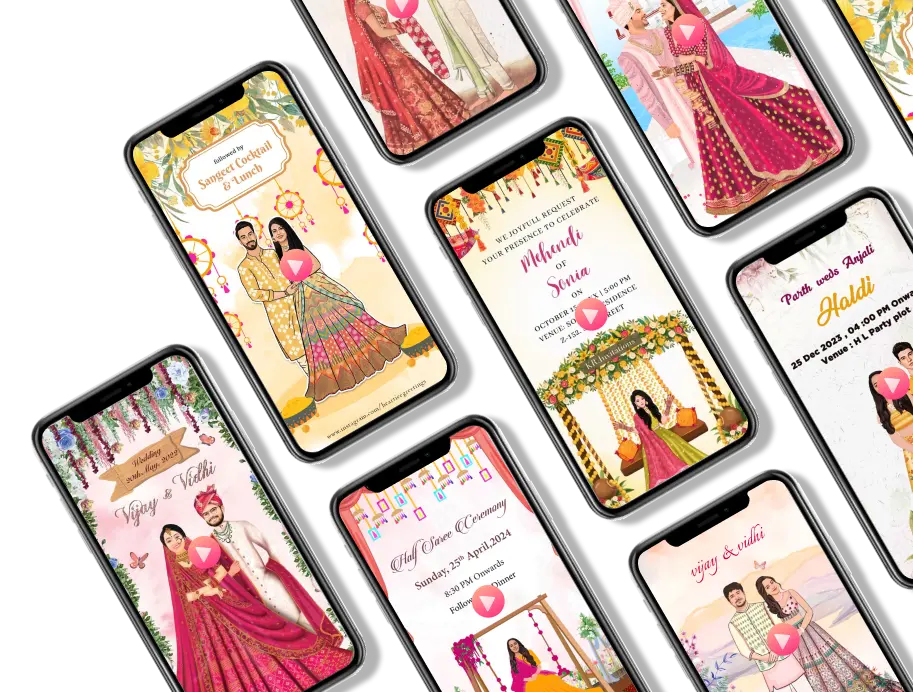
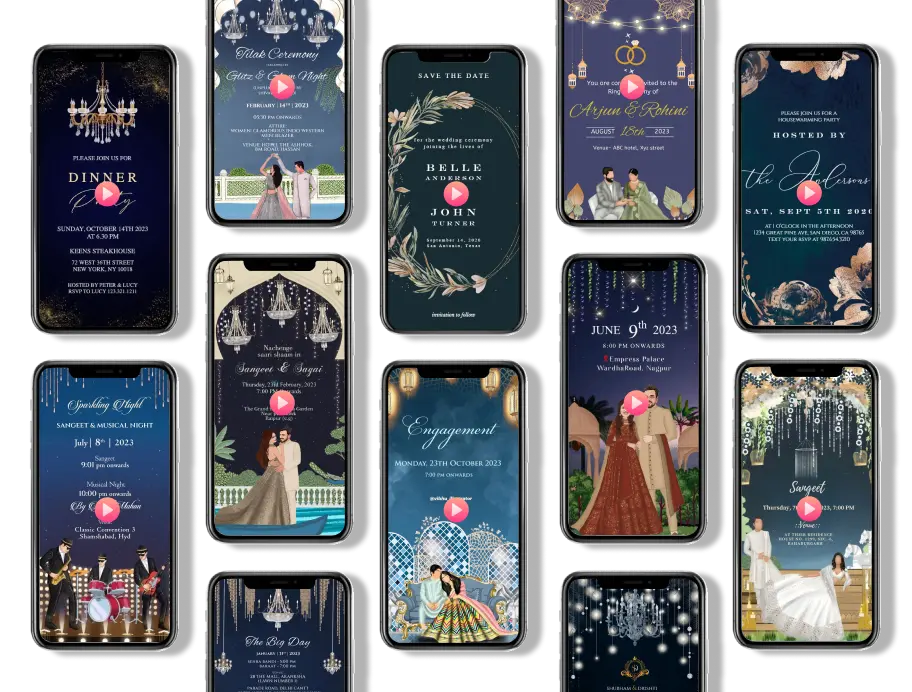
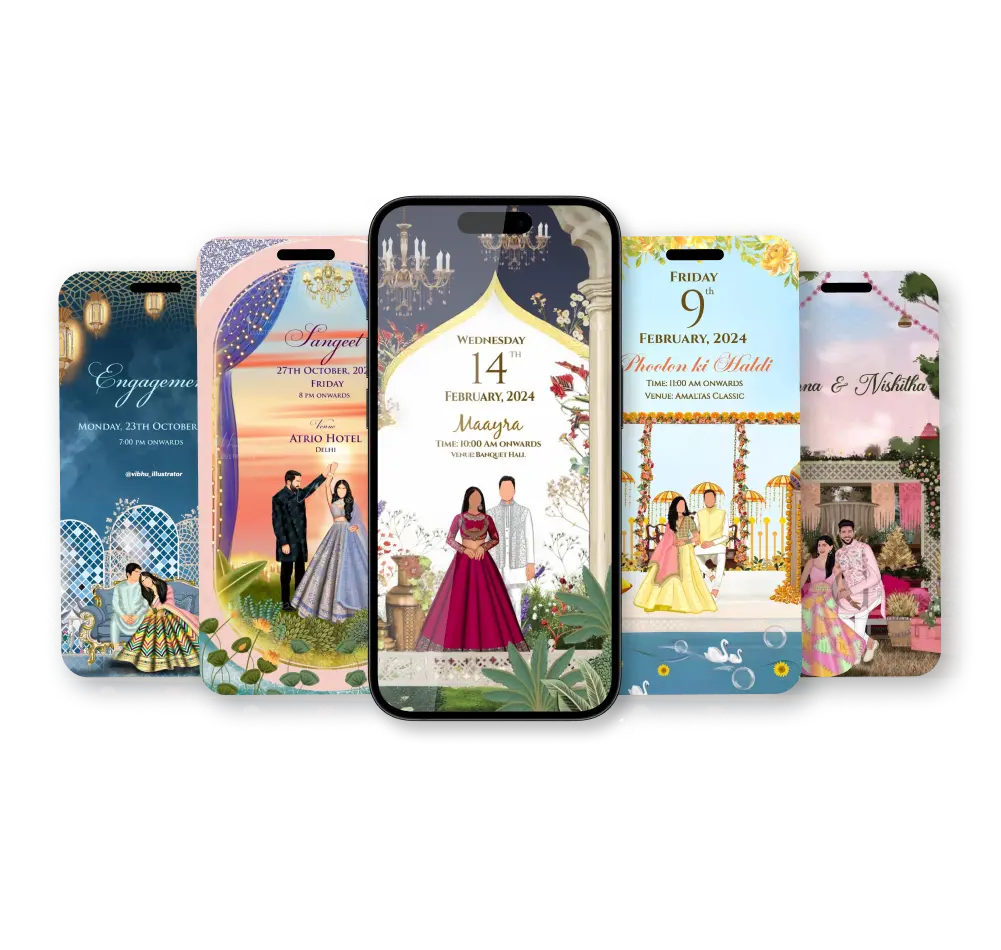
A celebration built on faith and family deserves an invitation with the same warmth. InvitoAI's Muslim wedding video invitation templates let you add the couple's names, the Nikah or Walima date, time, and venue, wrapped in elegant animations, so you can share the joyful news with relatives and friends instantly over WhatsApp or email.
Frequently Asked Questions
Can one video invitation cover both the Nikah and the Walima?
Yes, many families mention both events in a single invitation if they are held close together, or you can send separate invitations for each.
Can the invitation include a verse from the Quran or a specific blessing?
Yes, you can add a short Quranic verse, dua, or personal blessing to the invitation text.
Do you have invitations for the pre-wedding Mehndi night as well?
Yes, browse our Haldi and Mehendi ceremony and reception party invitation video collections for the celebrations around the wedding.
Conclusion
A Muslim wedding is a beautiful and sacred celebration of love, commitment, and faith. The Nikah serves as the spiritual and legal foundation of the marriage, while the Walima and any accompanying festivities give family and friends the chance to celebrate the couple together. A Muslim wedding is not just a union of two individuals but a merging of families and communities, grounded in love, faith, and shared traditions.